Both Teams to Score — almost always shortened to BTTS — is one of the most popular football betting markets, and also one of the easiest to grasp. Instead of backing a winner, you are simply predicting whether both sides will find the net at least once. This guide explains what the BTTS market means, how a bet is settled, the main variations you will see at a sportsbook, how the odds are built, and the points Kiwi punters should check before placing one. It is general information, not a tip or a recommendation.
What “Both Teams to Score” actually means
BTTS is a two-way market: you are offered “Yes” or “No”, and the final result of the match is irrelevant. All that matters is whether each team scores at least one goal.
- BTTS — Yes: wins if both teams score at least one goal. A 1-1 draw, a 2-1 win or a 3-2 thriller all settle “Yes”, because each side scored.
- BTTS — No: wins if one or both teams fail to score. A 1-0, a 2-0 or a 0-0 all settle “No”, because at least one side kept a clean sheet.
Because you are not tied to a winner, BTTS is often used alongside other outcomes. It is a different idea from a market like Draw No Bet, where you are still backing a team but get your stake back if the match is drawn. With BTTS, nobody has to win — both just have to score. It is one of the headline markets you will find across the football betting section of any sportsbook.
How a BTTS bet is settled
The settlement rules are where beginners most often slip up, so they are worth reading carefully before you stake anything.
- Only the regular 90 minutes count. A standard BTTS bet is settled on the score after 90 minutes plus stoppage (injury) time. Goals scored in extra time or a penalty shootout do not count. A knockout tie that is 0-0 after 90 minutes but finishes 1-1 in extra time still settles as BTTS “No”.
- Own goals count. If a goal is officially awarded, it does not matter how it was scored. A 1-1 scoreline made up of two own goals is still a winning BTTS “Yes”.
- Abandoned matches are usually voided. If a game is abandoned before full time, most bookmakers void the bet and return the stake — though some settle markets that are already decided. Policies vary, so check the operator’s rules.
These details differ slightly between bookmakers and between competitions, so the single most reliable step is to read the specific market terms before you confirm the bet.
The main BTTS variations
“Both Teams to Score” is a family of related markets, not a single bet. The standard version is the most common, but sportsbooks also offer tighter or combined versions at longer odds. The table below compares the main ones on the same points.
BTTS variations
| Market | What must happen to win “Yes” | Notes |
|---|---|---|
| Both Teams to Score (standard) | Each team scores at least one goal in 90 minutes | The most common version; the match result does not matter |
| BTTS & Win | Both teams score and your chosen team wins | Combined bet at longer odds; e.g. a 2-1 home win |
| BTTS in Both Halves | Each team scores in the first half and in the second half | Four separate scoring events needed; much rarer |
| First Half BTTS | Both teams score before half-time | Settled at the interval; second-half goals are ignored |
| Second Half BTTS | Both teams score after half-time | Only goals in the second 45 minutes count |
| BTTS in a multi / accumulator | Every selected match settles “Yes” | All legs must land; a single miss loses the whole bet |
The “both teams to score in the second half” option is a frequent source of confusion: only goals scored after half-time count, so a 1-1 first half followed by a goalless second half settles as “No”. The “both halves” version is far harder again, because each team must score in the first half and in the second half — four separate scoring events across one game.
How BTTS odds and the margin work
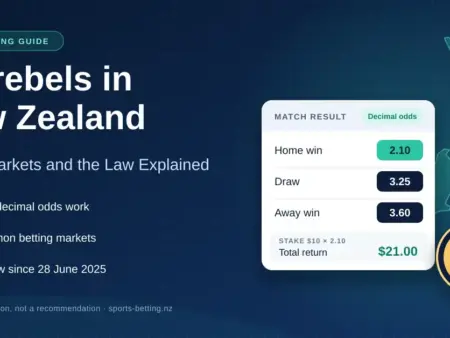
BTTS prices are shown as decimal odds. A “Yes” price of 1.70 means a NZ$10 bet returns NZ$17 in total (your NZ$10 stake plus NZ$7 profit) if it wins. When two attack-minded teams with leaky defences meet, “Yes” tends to be the shorter (more likely) price; a tight defensive fixture pushes “No” shorter instead.
Add the “Yes” and “No” implied chances together and they come to more than 100%. That extra slice is the bookmaker’s margin, or overround — the built-in edge that lets the sportsbook profit over time regardless of the result. It is why no single BTTS selection is ever “free money”, even when one outcome looks obvious.
What influences whether both teams score
There is no way to know a result in advance, but these are the factors analysts commonly look at when assessing a BTTS market. They explain the odds; they do not guarantee an outcome.
- Defensive records: sides that regularly concede give the opposition more chances to score.
- Attacking consistency: teams that score in most of their matches, home and away, keep the “Yes” side alive.
- Match context: a cagey relegation six-pointer or a tense derby can see both teams sit deep and “park the bus”, which favours “No”.
- Team news: missing strikers, a rested first-choice goalkeeper or a makeshift defence can all shift the balance.
Common mistakes with the BTTS market
- Treating it as a safe bet. BTTS feels simple, but a short price still reflects real risk, and any single leg can miss.
- Forgetting the 90-minute rule. Pinning hopes on an extra-time goal is pointless — those goals never count.
- Overloading accumulators. BTTS is popular in a multi bet, where several matches must all land “Yes”. Each extra leg multiplies the odds but sharply cuts the chance of the whole bet winning.
- Assuming high-scoring equals BTTS. A 4-0 win is plenty of goals but settles “No”, because one team was shut out.
- Skipping the rules. Own-goal, abandoned-match and settlement terms vary by operator — not reading them is how surprises happen.
Is BTTS betting legal in New Zealand?
In New Zealand, sports betting works through a single licensed domestic operator: TAB NZ, which runs under the Racing Industry Act 2020 and the Gambling Act 2003. It is the only New Zealand-based bookmaker allowed to offer sports betting, and it lists football markets including BTTS.
Many offshore bookmakers also accept Kiwi customers. It is not an offence for a New Zealander to place a bet with an overseas operator, but those sites are not licensed or regulated here, so the local consumer protections do not apply — and their market rules can differ from TAB NZ’s. The Online Casino Gambling Act 2026, which came into force in 2026, regulates online casino gambling only; real sports and race betting sit outside it and remain under the existing racing and gambling legislation overseen by the Department of Internal Affairs.
Responsible gambling
This article is for information only. It does not encourage betting and is not financial or betting advice. Betting markets are designed with a built-in margin, so the odds favour the bookmaker over time and no bet is ever guaranteed. You must be 18 or over to bet in New Zealand. If gambling is causing you or someone you know harm, free and confidential support is available 24/7 from the Gambling Helpline Aotearoa on 0800 654 655, or by texting 8006.
Sources
- OddsShopper — BTTS Meaning: Both Teams to Score in Soccer Betting
- Flashscore — Does Extra Time Count in Bets?
- SoccerNews — Both Teams to Score (BTTS) Betting: The Complete Guide
- MinterEllisonRuddWatts — Licence to operate: New Zealand’s Online Casino Gambling Act 2026
- Department of Internal Affairs — Gambling
- Gambling Helpline Aotearoa
Frequently asked questions
Does “Both Teams to Score” include extra time?
No. A standard BTTS bet is settled on the score after the regular 90 minutes plus stoppage time. Goals in extra time or a penalty shootout do not count, even in a knockout match.
Do own goals count towards BTTS?
Yes. As long as the goal is officially awarded, it counts for the team credited with it. A 1-1 scoreline created by two own goals still settles BTTS “Yes”.
What does “Both Teams to Score in the second half” mean?
It is a stricter version where both teams must score at least once after half-time. Only second-half goals count, so a lively first half followed by a goalless second half settles as “No”.
What happens to a BTTS bet if the match is abandoned?
Most bookmakers void the bet and return your stake if a match is abandoned before full time. Some operators settle markets that are already decided, so always check the specific rules of the sportsbook you are using.
Is BTTS available at New Zealand bookmakers?
Yes. TAB NZ, the country’s licensed domestic operator, offers BTTS on football fixtures, and many offshore bookmakers do too. Offshore sites are not regulated in New Zealand, so their rules and protections can differ.