Placing a bet online has become part of how many New Zealanders follow sport, but the rules around it changed significantly in 2025 and 2026. This guide explains, in plain English, who can legally take an online bet in New Zealand, how to tell whether a site is genuinely safe, how odds and payments work, and the free tools and support available if betting stops being fun. It is written to inform rather than to promote any operator, and it assumes you are 18 or over.
Key Points
- Online sports and racing betting is legal in New Zealand only through the licensed operator, TAB NZ, since 28 June 2025.
- Unlicensed offshore operators that take NZ bets risk penalties up to NZD $5 million and sit outside New Zealand consumer protection.
- Online casino games are covered by a separate 2026 law; sports and racing betting are not part of it.
- You must be 18 or over, and recreational winnings are generally not taxed.
- Safety basics: https encryption, identity (KYC) checks, deposit limits and self-exclusion tools.
- Free, confidential help: Gambling Helpline 0800 654 655 or free text 8006, 24/7.
Is online betting legal in New Zealand in 2026?
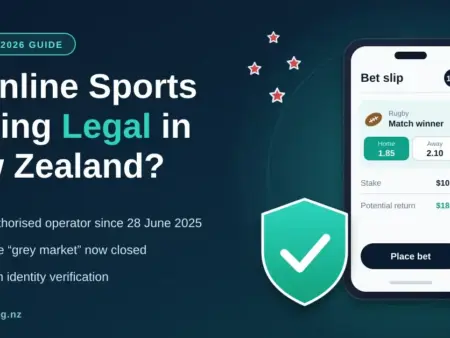
Gambling in New Zealand is governed by the Gambling Act 2003 and administered by the Department of Internal Affairs (DIA). For sports and racing betting specifically, the picture changed on 28 June 2025, when amendments to the Racing Industry Act 2020 came into force. Those changes make TAB NZ the only organisation legally allowed to offer online sports and racing betting to people located in New Zealand.
After a short transition period, unlicensed offshore operators that keep taking bets from New Zealand residents became subject to civil penalties of up to NZD $5 million for a company and NZD $300,000 for an individual. In short, the law now targets the operators rather than everyday punters, but the practical effect is clear: the only domestically licensed way to bet on sport and racing online is through TAB NZ’s tote and fixed-odds service. For the full legal background, see our guide to whether online sports betting is legal in New Zealand.
Online casinos are handled under a completely separate law, the Online Casino Gambling Act 2026, which created the country’s first licensing system for online casino games. That regime does not cover sports or racing betting, and licences are being rolled out through a competitive process in late 2026. If you want to understand how the authorities treat sites based overseas, our explainer on how New Zealand regulates offshore sportsbooks goes into more detail.
What the law changes mean for you
A few practical points follow from the current rules:
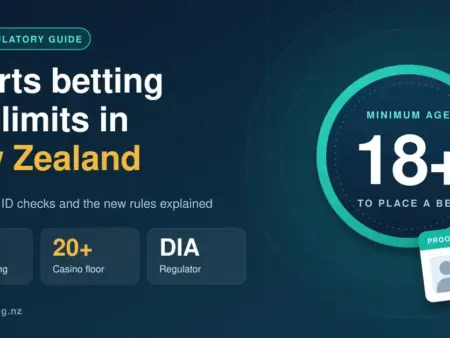
- You must be at least 18 to open a betting account or place a wager.
- Betting with the licensed New Zealand operator gives you the clearest consumer protections, local dispute pathways and account-safety tools.
- Offshore sportsbooks that still advertise to Kiwis operate outside this framework. They are not overseen by the DIA, so if funds are withheld or an account is closed, your options for recourse are limited.
- For most recreational punters, winnings are not taxed. Inland Revenue (IRD) generally treats casual gambling as recreation rather than income, though someone who gambles as a full-time business may be treated differently.
How online betting odds work
New Zealand sites use decimal odds, which bundle your stake and your potential profit into a single number. To find your total return, multiply your stake by the odds. For example, a $100 bet at odds of 1.85 returns $185 in total — your original $100 stake plus $85 of profit. A losing bet simply forfeits the stake.
The odds also contain the bookmaker’s built-in margin, which is the small edge that lets the operator profit over time. You can read a price as an implied chance by dividing 1 by the odds: 1 ÷ 2.00 is 0.50, or a 50% implied probability. Understanding this helps you judge whether a price looks fair rather than chasing a figure that simply looks large. Our full walkthrough of decimal odds for Kiwi bettors covers the maths in more depth.
The table below shows how the same stake pays out at different prices. These are illustrative figures, not live markets.
| Stake | Decimal odds | Total return | Profit |
|---|---|---|---|
| $10 | 1.50 | $15.00 | $5.00 |
| $10 | 2.00 | $20.00 | $10.00 |
| $20 | 1.85 | $37.00 | $17.00 |
| $10 | 3.50 | $35.00 | $25.00 |
How to check that a betting site is safe
In New Zealand, the single clearest safety signal is simply using the licensed operator rather than an offshore site with no local accountability. Beyond that, a few technical checks apply to any website that handles your money and identity documents. For an overview of sports betting in New Zealand as a whole, start with our sports betting NZ guide.
- Encryption: Look for “https” and a padlock in the address bar before entering any details. This means the connection uses SSL/TLS encryption, which scrambles data such as card numbers and passwords so they cannot be read if intercepted.
- Two-factor authentication (2FA): An extra login step, usually a code sent to your phone, that stops someone logging in with your password alone. Turn it on if the site offers it.
- Clear privacy and data handling: A reputable operator publishes a privacy policy explaining how your identity documents are stored and who can access them.
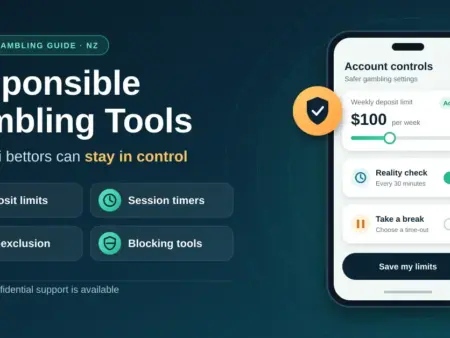
- Built-in safer-gambling tools: Deposit limits, time-out options and self-exclusion should be easy to find inside your account.
- Segregated player funds: Customer balances should be held separately from the company’s operating money, so your funds are not used to run the business.
- Transparent terms and a complaints path: Plain-language rules on bets, bonuses, withdrawals and account closure, plus reachable support and a clear way to raise a complaint.
- Fraud monitoring and secure document upload: Systems that flag unusual logins or activity, and an encrypted portal for identity checks rather than email.
Pre-Deposit Safety Checklist
- Confirm the operator is legally allowed to take New Zealand bets.
- Check for https and a padlock in the address bar before entering any details.
- Read how your identity documents are stored in the privacy policy.
- Turn on two-factor authentication if it is offered.
- Set a deposit limit before placing your first bet.
- Keep a record of your deposits, bets and withdrawals.
- Find the self-exclusion and time-out options so you know how to use them.
Independent integrity and fairness checks
Some international bodies monitor betting markets and test gaming systems. eCOGRA is a testing agency that audits game fairness and payout data, while the International Betting Integrity Association (IBIA) monitors global betting activity for signs of match-fixing and suspicious wagering. Seeing such affiliations is a mild positive signal, but it is no substitute for local licensing: an overseas certificate does not give a New Zealander the same legal protections as betting with the domestically licensed operator.
Deposits and withdrawals in New Zealand dollars
Using an account that works in New Zealand dollars (NZD) keeps things simple and avoids the 2% to 3% currency-conversion fees that banks often add to overseas transactions. For the licensed New Zealand operator, funding and payouts run through everyday local banking rather than exotic payment apps.
| Method | Deposit speed | Typical withdrawal time | Notes |
|---|---|---|---|
| NZ debit or credit card (Visa/Mastercard) | Instant | 1 to 3 business days | Card must be in your own name. |
| Internet banking / bank transfer | Same day to 1 business day | 1 to 3 business days | Paid to a verified NZ bank account. |
| Account top-up (in branch or via app) | Instant to same day | Not applicable | Useful for setting a fixed budget. |
Reputable operators pay winnings only to a verified account in your own name, which is a fraud-prevention measure rather than a delay tactic. Be cautious of any site promising “instant” payouts to anonymous wallets, as this often signals an unregulated operator.
Identity verification (KYC)
Know Your Customer (KYC) checks are identity verification steps required by anti-money-laundering rules. You can usually register and deposit within minutes, but an operator must confirm who you are before releasing your first withdrawal. Completing this early avoids delays later. Typically you will provide:
- A clear photo of valid government ID, such as a current New Zealand passport or driver’s licence.
- Proof of address issued in the last three months, such as a utility bill or bank statement showing your name and address.
- Confirmation that the payment method belongs to you.
Always upload these through the site’s secure portal rather than by email, and never send documents to anyone who contacts you out of the blue.
Bonuses and wagering requirements explained
Sign-up offers are a marketing tool, most often seen on offshore sites, and their real value lies in the fine print. The key term is the wagering (or turnover) requirement: the number of times you must bet an amount before bonus funds can be withdrawn. Minimum-odds rules and short expiry windows usually apply too.
For example, a $100 bonus with a 5x wagering requirement and a 1.80 minimum-odds rule means you must place $500 in qualifying bets at 1.80 or higher before any bonus winnings can be cashed out. Miss the deadline and the bonus and its winnings are usually forfeited. The table shows how the required turnover grows.
| Bonus value | Wagering requirement | Minimum odds | Total turnover needed |
|---|---|---|---|
| $50 | 3x | 1.50 | $150 |
| $100 | 5x | 1.80 | $500 |
| $200 | 8x | 2.00 | $1,600 |
A bonus does not improve your odds of winning any individual bet, and the conditions can make it harder to come out ahead than it first appears. Treat any offer as a set of rules to read carefully, not a reason to bet more than you planned.
Managing your bankroll and staying in control
No system changes the fact that outcomes are uncertain, so how you manage money matters more than any tip. Experienced punters keep their betting funds separate from everyday money and stake only a small, fixed percentage — often 1% to 5% — on any single bet, a method known as unit staking.
- Set a dedicated budget separate from bills, rent and savings.
- Decide your unit size in advance and keep it consistent.
- Record your bets, stakes and results so you can see the real picture.
- Never chase losses by increasing stakes after a bad run.
For a structured approach, see our guide to bankroll management for sports betting in NZ.
Where to get help in New Zealand
If betting ever stops feeling like entertainment, free and confidential help is available. Most licensed operators let you set deposit limits, take a time-out or self-exclude directly from your account; our overview of responsible gambling tools for NZ bettors explains each one. Independent support services are listed below.
| Service | Contact | What it offers |
|---|---|---|
| Gambling Helpline Aotearoa | Call 0800 654 655 or free text 8006 | Free, confidential 24/7 phone, text and web support. |
| Specialist helplines | Māori 0800 654 656 · Pasifika 0800 654 657 · Youth 0800 654 659 | Culturally focused and youth-specific counselling. |
| Problem Gambling Foundation / Salvation Army Oasis | Local clinics and web consultations | Face-to-face counselling and family support. |
Important information and responsible gambling
This article is general information, not legal, financial or betting advice, and it does not encourage you to gamble. Betting involves risk, you can lose money, and no strategy, bonus or demo play changes the odds in your favour. You must be 18 or over to bet in New Zealand. If gambling is causing you or someone you know harm, contact the Gambling Helpline on 0800 654 655 (free text 8006) or visit safergambling.org.nz. Information about the law and licensed operators is published by the Department of Internal Affairs.
Sources
Frequently asked questions (FAQ)
Is online sports betting legal in New Zealand?
Yes, but only through the licensed operator. Since 28 June 2025, TAB NZ is the only organisation legally allowed to offer online sports and racing betting to people in New Zealand. Unlicensed offshore operators that take bets from New Zealand residents face civil penalties, and they sit outside New Zealand consumer protection. You must be 18 or over to bet.
Are my betting winnings taxed in New Zealand?
For the vast majority of recreational players, no. Inland Revenue generally treats casual gambling as a recreational activity rather than income, so occasional winnings are not taxed. The position can differ for a person who gambles as an organised business or primary source of income, so professional-level activity should be checked with a tax adviser.
How do I know an online betting site is safe?
Start with whether the operator is legally allowed to take New Zealand bets, as that provides the strongest protection. Then check that the site uses https encryption (a padlock in the address bar), publishes a clear privacy policy, verifies your identity before paying out, and offers deposit limits and self-exclusion tools inside your account.
How do decimal odds work?
Decimal odds show your total return per dollar staked, including your stake. Multiply your stake by the odds to get the total return: a $50 bet at 2.50 returns $125, which is $75 profit plus your $50 stake. Dividing 1 by the odds gives the implied chance, so 2.50 implies a 40% probability.
What documents do I need to verify my account?
You generally need a clear photo of valid government ID, such as a current New Zealand passport or driver’s licence, plus proof of address from the past three months, such as a utility bill or bank statement. You may also need to confirm that your payment method belongs to you. Upload these only through the operator’s secure portal.
Where can I get help if betting becomes a problem?
Free, confidential help is available 24/7 from the Gambling Helpline on 0800 654 655, or by free texting 8006. Specialist Māori, Pasifika and youth lines are also available, and services such as the Problem Gambling Foundation and Salvation Army Oasis offer face-to-face counselling. Most licensed operators also let you set limits or self-exclude from your account.