A $3 deposit casino is an online casino that lets you top up your account with only a few dollars rather than the $20 or $50 that many sites still expect. For budget-conscious players across Aotearoa New Zealand, this small-stakes approach is a way to try a real-money lobby, test how fast a site pays out, and keep entertainment spending genuinely low.
This guide explains how very low minimum deposits actually work in 2026, what has changed in New Zealand gambling law, which payment methods suit small top-ups, and how bonuses, pokies and jackpots behave on a tiny bankroll. It is written as plain information, not a recommendation to gamble, and it points to official sources so you can check the details yourself.
Key Points
- A “$3 deposit casino” is shorthand for low or minimum deposit casinos; a true $3 minimum is uncommon, with most sites setting $1–$20.
- Small deposits limit spending and let you test a site — they do not change the house edge or improve your odds.
- The lowest top-ups are usually funded by prepaid vouchers or digital wallets, not bank cards.
- New Zealand’s Online Casino Gambling Act 2026 introduced operator licensing via the DIA, phased in through 2026–2027; playing offshore is not an offence for residents.
- Bonus winnings depend on wagering requirements — read the terms, or skip the bonus for unrestricted cash.
- You must be 18+. Free help is available from Gambling Helpline Aotearoa on 0800 654 655.
What a “$3 deposit casino” actually means
There is no single, fixed “$3” product. The phrase describes the broader category of low or minimum deposit casinos, where the smallest amount you can add varies by site and by payment method. In practice the lowest thresholds you will see sit somewhere between $1 and $20, and an exact $3 minimum is uncommon. Where small top-ups are possible, they are usually funded through prepaid vouchers or digital wallets rather than a bank card.
The appeal is control, not value for money. A small deposit limits how much you can lose in one sitting and lets you audit a platform — its loading speed, support, game range and withdrawal process — before committing anything larger. It does not change the house edge or improve your chances of winning; the odds on each game are identical whether you deposit $3 or $300.
Why the minimum varies by payment method
Card networks and international bank wires are built for larger transactions and often carry flat fees that make a $3 transfer uneconomic for everyone involved. Specialised wallets and voucher services, by contrast, are designed to move small amounts instantly, which is why the lowest advertised minimums almost always appear alongside those options. Always read the cashier page: the deposit minimum, any fees, and the separate withdrawal minimum are three different numbers.
Is a low-deposit casino legal in New Zealand in 2026?
New Zealand’s rules changed significantly in 2026. The Online Casino Gambling Act 2026 created, for the first time, a licensing system for online casinos, administered by the Department of Internal Affairs (DIA). Under the regime, a capped number of operators — up to 15 — can apply for a New Zealand licence through a competitive process that began with expressions of interest and an auction during 2026. The DIA has said the system is being phased in and is not expected to be fully operational until 2027.
For individual players the position is more settled: a New Zealand resident who plays at an offshore-licensed online casino is not committing an offence, and enforcement is aimed at operators rather than customers. That said, the market is actively changing — some offshore brands may apply for a local licence, while others may exit — so it is worth checking a site’s current licensing before you deposit. For the wider picture, see our overview of sports betting laws in New Zealand and how New Zealand regulates offshore sportsbooks.
Funding a small deposit: payment methods in New Zealand
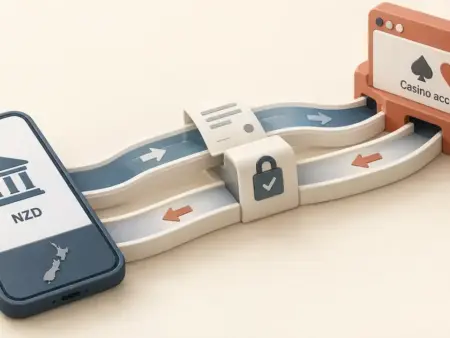
The methods that make tiny top-ups practical are those that process small amounts quickly and without heavy fixed fees. For New Zealand accounts, the common options fall into three groups: local bank-transfer services, prepaid vouchers, and digital wallets, with debit and credit cards still widely accepted for slightly larger minimums.
Payment Methods Compared
| Method | Type | Speed to deposit | Notes for NZ players |
|---|---|---|---|
| POLi | Bank transfer | Near-instant | Connects directly to NZ banks; no card details shared. Operates in NZ (its mobile app was discontinued in late 2024; “Pay by Bank” continues). |
| Paysafecard | Prepaid voucher | Instant | 16-digit PIN keeps bank details private; up to NZD 500 per transaction, small monthly fee from month two. |
| Digital wallets | E-wallet | Instant | Handle small amounts well and often pay out faster than cards; availability varies by site. |
| Debit / credit card | Card | Instant | Widely accepted but better suited to slightly larger minimums; check for fees on tiny transfers. |
Before choosing a method, confirm two things: that the site processes your balance in New Zealand Dollars (NZD) to avoid currency-conversion costs, and that your chosen method also supports fast withdrawals — some wallets pay out far quicker than card refunds.
Prepaid vouchers and keeping to a budget
Prepaid vouchers such as Paysafecard are popular with players who want a hard spending limit. You buy a voucher with a 16-digit PIN, then enter that PIN to deposit — your bank details never touch the casino. Paysafecard’s New Zealand service allows up to NZD 500 per transaction and applies a small monthly maintenance fee from the second month after purchase, so use the balance rather than leaving it sitting idle. Once a voucher is spent, you cannot top up again until you buy another, which creates a natural brake on impulse deposits. Use Paysafecard’s own store finder to confirm a nearby outlet before relying on it.
Bonuses and wagering requirements
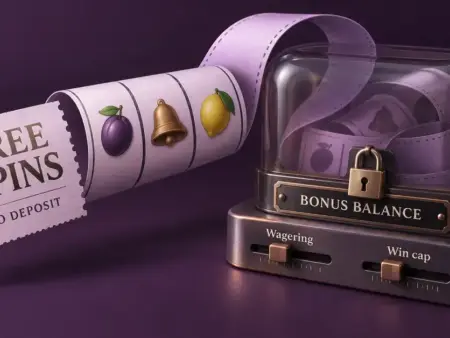
Low-deposit sites frequently advertise free spins or matched-cash offers for a small first deposit. These can add play time, but they are governed by terms that decide whether any winnings can actually be withdrawn. The single most important term is the wagering requirement (also called play-through): the number of times you must bet the bonus — and sometimes the deposit too — before it converts to withdrawable cash.
If you are weighing an offer, read the fine print the way you would a contract. Our guide to casino free spins in New Zealand explains how these deals are structured; the checklist below covers the terms that most often catch people out.
- What the multiplier applies to: whether the play-through covers only the bonus credits or your deposit as well.
- Game weighting: pokies usually count 100% toward wagering, while table games such as blackjack may count 10% or nothing at all.
- Maximum win or cash-out cap: many small-deposit offers limit how much of a bonus win you can actually keep.
- Time limit: bonus funds and free spins commonly expire within a few days of activation.
Why some players skip the bonus
Because the conditions on small-deposit bonuses can be steep, some experienced players decline promotions at sign-up. A plain deposit stays unrestricted cash: if you win early, you can request a withdrawal straight away, subject only to standard identity checks. There is no “right” choice here — it depends on whether you value extra spins or maximum flexibility.
Making a small balance last on pokies
Online pokies are the main attraction for most players, and modern titles let you lower the stake per spin to a few cents, so even a $3 balance can stretch across dozens of spins if you pick games sensibly. Two numbers matter more than the theme or graphics: the minimum bet and the game’s volatility.
Volatility describes how a game pays. Low-volatility pokies tend to return smaller wins more often, which keeps a modest balance ticking over; high-volatility games can pay large but go through long dry spells that drain a small bankroll before a feature triggers. A related figure, return to player (RTP), is the long-run theoretical payout percentage — useful for comparison, but no guarantee over a short session.
Matching volatility to a limited bankroll
| Volatility level | Typical payout pattern | Fit for a small balance |
|---|---|---|
| Low | Frequent small wins, modest top prizes | Best for stretching gameplay and testing a site |
| Medium | Balanced mix of small and occasional larger wins | Reasonable if you accept more swing |
| High | Rare but potentially large wins, long dry spells | Risky on $3; the balance can clear in a few spins |
If pokies are not your focus, other low-stake formats exist too — our explainer on how Keno works covers one of the simplest.
Progressive jackpots on small stakes
Many low-deposit lobbies do not lock you out of progressive jackpots — games that pool a slice of every bet across a network until someone wins. It is true that a jackpot can technically land on a small qualifying spin, because outcomes are decided by a certified random number generator (RNG). It is equally true that the odds of winning a top tier are extremely long, and some jackpot games require a minimum qualifying bet above a few cents. Treat these as entertainment with a tiny lottery-style chance, not a plan.
Well-known networks such as Microgaming’s Mega Moolah have historically reset their top tier to a guaranteed minimum (around €1 million) after each win and pay large wins as a lump sum, but exact figures and rules change over time and should be read on the game itself.
Live dealer tables and mobile play
Live dealer games stream a real human dealer from a studio in high definition and sit between digital pokies and a land-based floor. They usually carry slightly higher minimum bets than automated slots because a studio is expensive to run, though many sites now offer low-stakes roulette, blackjack and game-show formats that casual players can join.
On mobile, most reputable casinos use responsive web design, so you can play through a standard browser without installing anything; some also offer native apps that add features such as fingerprint or face login. Neither is required — a modern mobile browser gives you the full library, the cashier and account controls.
Safety, licensing and fair play
Even a $3 deposit involves sharing personal details, so the operator’s safeguards matter regardless of the amount. A credible site will hold a recognised gambling licence — from the New Zealand regime as it comes online, or from an established jurisdiction such as the Malta Gaming Authority — and will state it clearly. The practical checks are straightforward:
- Encryption: look for SSL/TLS protection so your details are scrambled in transit.
- Independent game testing: reputable operators have their RNGs tested by independent labs such as eCOGRA or iTech Labs; a certificate or seal is usually linked in the footer.
- Segregated funds: player balances held separately from the company’s operating money.
- Identity verification: standard Know Your Customer (KYC) checks confirm your age and identity and are a legal requirement, not a red flag.
Keeping it in control
A low minimum deposit makes it easy to keep spending light, but the tools built into your account are what keep it that way. Deposit limits, loss limits, session reminders and cooling-off periods let you set boundaries in advance rather than in the heat of a session. Our guide to responsible gambling tools for NZ players explains each one, and if you need a firmer break you can self-exclude from betting and casino sites.
Disclaimer
This article is general information about low-deposit online casinos in New Zealand. It is not gambling, financial or legal advice, and nothing here encourages you to gamble. Gambling involves real risk and no strategy, bonus or demo changes the odds. You must be 18 or over. Laws and licensing are changing under the Online Casino Gambling Act 2026 — check the Department of Internal Affairs for the current position before you play.
If gambling is causing harm to you or someone you know, free, confidential help is available 24/7 from the Gambling Helpline Aotearoa on 0800 654 655 (free text 8006), part of the Government’s Safer Gambling Aotearoa programme. Specialist Māori (0800 654 656), Pasifika (0800 654 657) and youth (0800 654 659) lines are also available.
Reference Sources
- Department of Internal Affairs — Online Casino Gambling
- iGaming Business — New Zealand online casino gambling bill passes final reading
- Simpson Grierson — House Rules: New Zealand’s new online casino regime
- Paysafecard New Zealand — official site
- Gambling Helpline Aotearoa
- eCOGRA — independent testing and certification
Frequently Asked Questions
Do $3 deposit casinos really exist in New Zealand?
A true $3 minimum is uncommon. Most low-deposit sites set their smallest top-up somewhere between $1 and $20, and the very lowest amounts are usually only possible through prepaid vouchers or digital wallets rather than a bank card. Always check the cashier page for the exact minimum before you register.
Is it legal to play at an online casino in New Zealand?
Individual residents do not commit an offence by playing at an offshore-licensed online casino, and enforcement under the Online Casino Gambling Act 2026 targets operators, not players. A new licensing regime overseen by the Department of Internal Affairs is being phased in through 2026 and 2027, so check a site’s current licence and the DIA’s guidance before depositing.
Which payment methods work best for a very small deposit?
Methods built for small, instant transfers work best — prepaid vouchers such as Paysafecard, bank-transfer services, and digital wallets. Cards are widely accepted but often suit slightly larger minimums. Confirm the site processes your balance in NZD so you avoid currency-conversion fees.
Can I win real money from a $3 deposit?
Yes. A small real-money deposit lets you play genuine games, and any winnings are real cash. You can withdraw once your balance meets the site’s minimum withdrawal amount and you have completed standard identity (KYC) checks. The small deposit does not change the odds of winning.
How do I keep my spending under control on a low-deposit site?
Set limits in your account before you start — deposit caps, loss limits, session reminders and cooling-off periods are standard tools. Prepaid vouchers add a natural ceiling because you cannot deposit more than the voucher holds. If you need to stop, self-exclusion and the Gambling Helpline on 0800 654 655 are available.